Bunions
Bunions
Bunions are a common foot deformity that develop when the great toe gradually shifts toward the smaller toes and the first metatarsal moves in the opposite direction. This creates the characteristic bump along the inside of the foot at the great toe joint.
Some bunions cause very little discomfort, while others can become painful when walking, wearing shoes, or participating in daily activities. As the deformity progresses, the great toe joint may also become stiff or irritated and footwear can become increasingly difficult to fit comfortably.
What Causes a Bunion?
Bunions usually develop gradually and are influenced by the structure and mechanics of the foot. Some people inherit a foot type that makes the great toe joint more likely to become unstable and shift out of alignment over time.
Factors that may contribute to bunion development or progression include:
- Family history and inherited foot structure
- Excessive pronation or abnormal foot mechanics
- Joint instability around the great toe
- Footwear that places pressure on the forefoot and toes
- Arthritis or other conditions affecting the great toe joint
Shoes do not necessarily cause a bunion on their own, but narrow or poorly fitting footwear can place additional pressure on an existing deformity and make symptoms worse.
For additional patient information about bunions, visit the American College of Foot and Ankle Surgeons’ FootHealthFacts website.
Concerned About a Bunion?
Schedule an appointment with Alberta Family Podiatry to have your Bunion assessed and discuss treatment options. Call 587-355-3992 or use the text button on this page to contact our clinic.
Early Bunion Care
A bunion does not necessarily require surgery, particularly when it is not causing significant pain or limiting activity. However, we recommend having a bunion assessed even in its earlier stages. Understanding the structure and mechanics of the foot can help identify factors that may be contributing to the deformity and allow conservative treatment to be considered before symptoms become more significant.
Conservative treatment may include changes in footwear, padding, activity modification, stretching, and orthotics when appropriate. Custom orthotics may help improve foot mechanics and reduce abnormal stresses around the great toe joint. While orthotics cannot reverse an existing bunion, they may help reduce symptoms and may be beneficial as part of a long-term approach to managing the condition.
Monitoring the bunion over time can also help determine whether the deformity is remaining stable or progressing. If pain, joint stiffness, difficulty with footwear, or changes in activity develop, additional treatment options can then be considered.
Bunion Treatment
Conservative treatment cannot reverse an existing bunion, but it can often help reduce symptoms and address some of the mechanical stresses affecting the great toe joint. The appropriate treatment depends on the size of the deformity, the patient’s symptoms, foot mechanics, activity level, and footwear.
Treatment options may include:
- Wider or more supportive footwear
- Padding to reduce pressure over the bunion
- Custom orthotics to improve foot mechanics and support
- Stretching when joint or muscle tightness is contributing to abnormal mechanics
- Activity modification when necessary
- Medication or other measures to help manage pain and inflammation when appropriate
The goal of conservative treatment is to keep the foot comfortable and functioning well for as long as possible. When conservative measures are no longer providing adequate relief, surgical correction may be considered.
Bunion Surgery
When a bunion becomes persistently painful, interferes with footwear or limits normal activities despite conservative treatment, surgical correction may be considered. The goal of bunion surgery is to improve the alignment of the great toe joint, reduce the prominent bump and address the underlying structural deformity.
There is no single bunion procedure that is appropriate for every patient. The type of surgery depends on the severity of the deformity, the position of the bones and joints, the presence of arthritis, and other factors identified during examination and X-rays.
At Alberta Family Podiatry, we assess each bunion individually and discuss whether surgery is appropriate, what type of correction may be required, and what to expect during recovery.
Alberta Family Podiatry has an on-site private surgical suite where appropriate bunion procedures, including selected minor to moderate bunion corrections, can be performed.
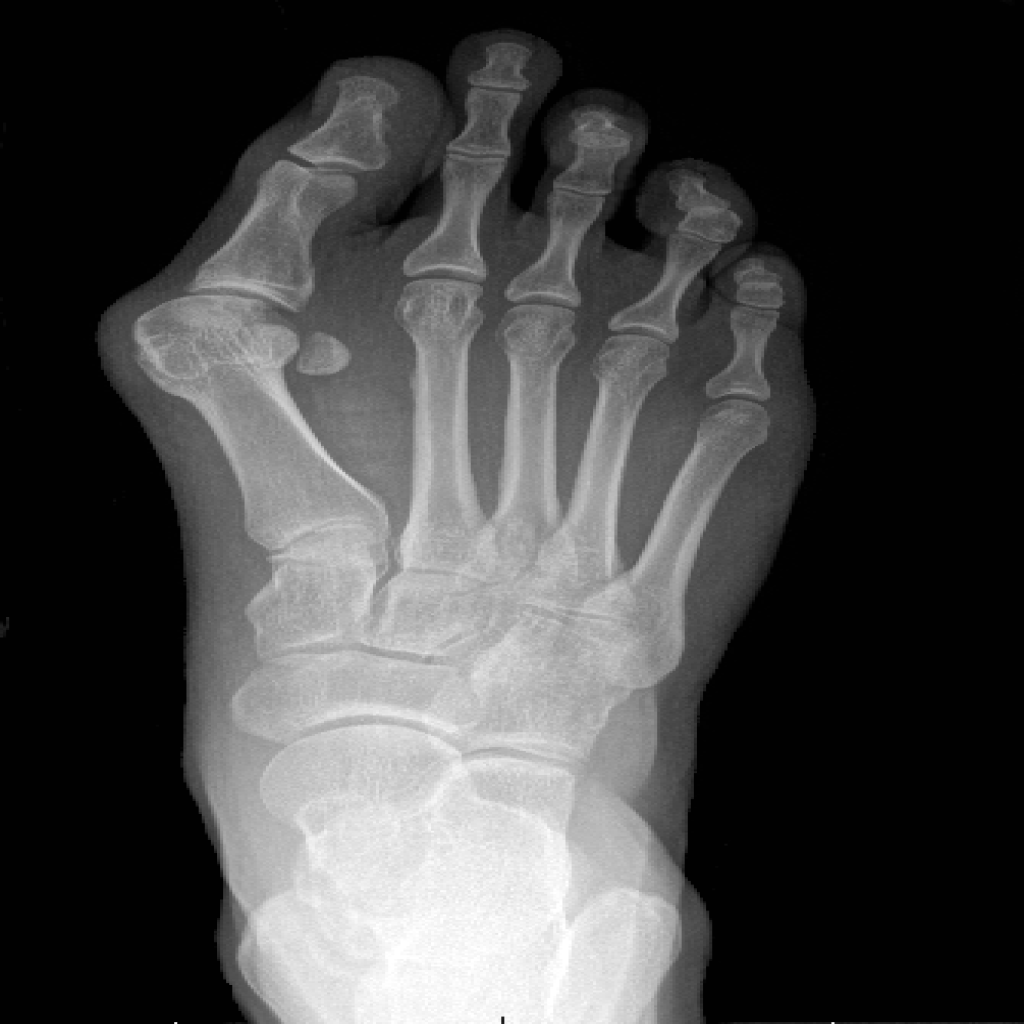
Before Surgery
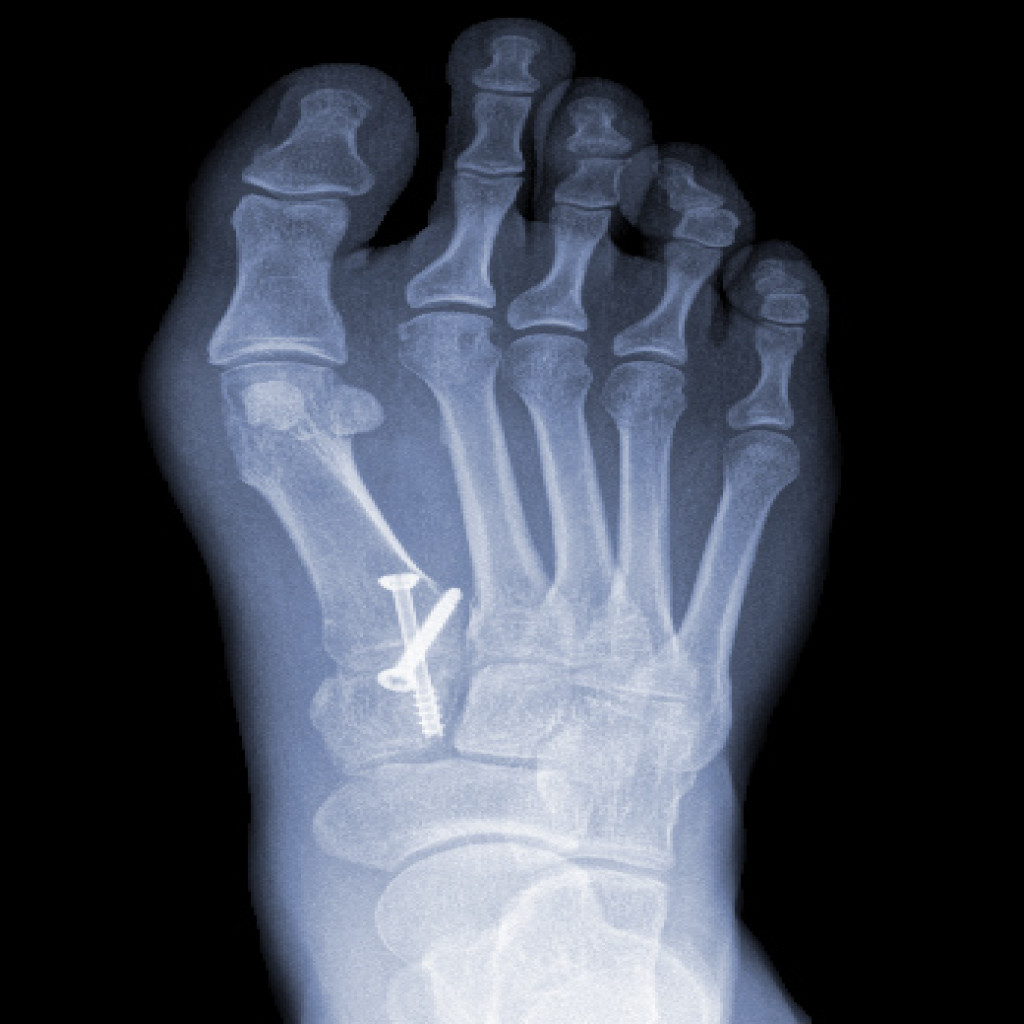
After Surgery
The X-rays above show an example of a bunion before and after surgical correction. The specific procedure required varies depending on the type and severity of the deformity, and individual results will vary.