Corns and Calluses
What Are Corns and Calluses?
Corns and calluses are areas of thickened skin that develop in response to repeated pressure or friction. They are the body’s way of protecting the skin, but when the thickened area becomes too large or pressure continues to build beneath it, they can become painful.
Corns and calluses are not the same thing. Corns are usually smaller and more concentrated, while calluses tend to involve a broader area of thickened skin. Both commonly develop on areas of the foot that are exposed to increased pressure from footwear, walking or the underlying structure of the foot.
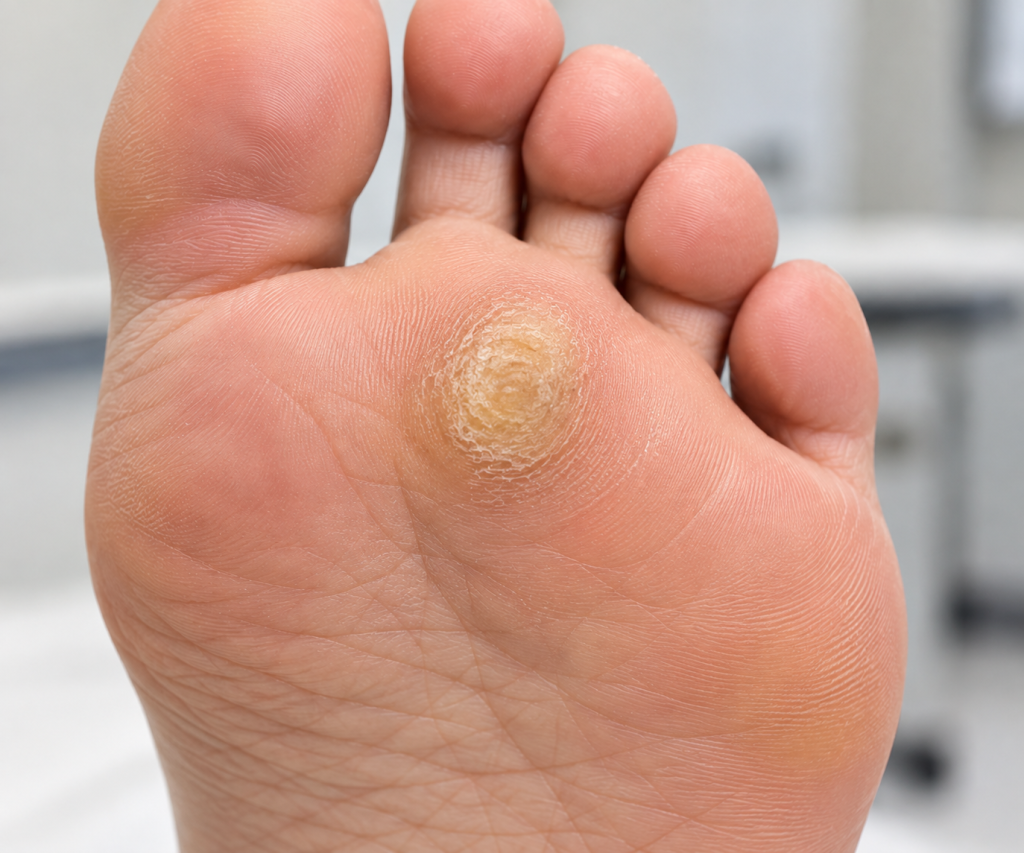
What Is the Difference Between a Corn and a Callus?
Corns are usually small, concentrated areas of thickened skin with a firm central core. They commonly develop on the tops or sides of the toes where footwear creates pressure, but they can also occur between the toes. Corns can become quite painful when pressure is applied directly to them.
Calluses are generally broader, flatter areas of thickened skin. On the feet, they commonly develop beneath areas that carry increased pressure, particularly under the heel or ball of the foot. A small amount of callus may not cause any symptoms, but thicker calluses can become uncomfortable or painful.
Painful Corn or Callus?
Schedule an appointment with Alberta Family Podiatry to have your corn or callus assessed and determine which treatment may be appropriate for your condition. Call us at 587-355-3992 or use the text button on this page to contact our clinic.
What Causes Corns and Calluses?
These areas of thickened skin develop when an area of the foot is exposed to repeated pressure or friction. This may come from footwear, but it can also result from the way pressure is distributed through the foot when standing and walking.
Foot deformities such as bunions and hammertoes can create prominent areas that rub against shoes or increase pressure beneath the foot. Other factors may include the shape of the foot, changes in joint position, activity level and the way a person walks.
Because the underlying cause of pressure can vary from one person to another, recurrent corns and calluses should be assessed rather than simply removed repeatedly.
Treatment Options
Treatment for corns and calluses focuses on reducing the thickened skin and, where possible, addressing the pressure or friction that caused it to develop. Painful corns and calluses can be carefully reduced in the office to relieve pressure and improve comfort.
Depending on the cause, treatment may also include changes in footwear, padding or offloading of pressure areas, and treatment of an underlying foot deformity. Custom orthotics may be recommended when foot mechanics or abnormal pressure beneath the foot are contributing to recurrent callus formation.
Corns and calluses can return if the underlying source of pressure remains. Identifying why the area continues to develop is therefore an important part of preventing or reducing recurrence.
People with diabetes should have corns and calluses assessed by a podiatrist. A callus can increase pressure on the skin underneath it and may contribute to skin breakdown and the development of a diabetic foot ulcer. Regular assessment and treatment of areas of increased pressure can help reduce the risk of wounds and other complications. For more information about protecting diabetic feet, visit Diabetes Canada, or make an appointment in our clinic for an assessment.