
Hammertoes
What are Hammertoes?
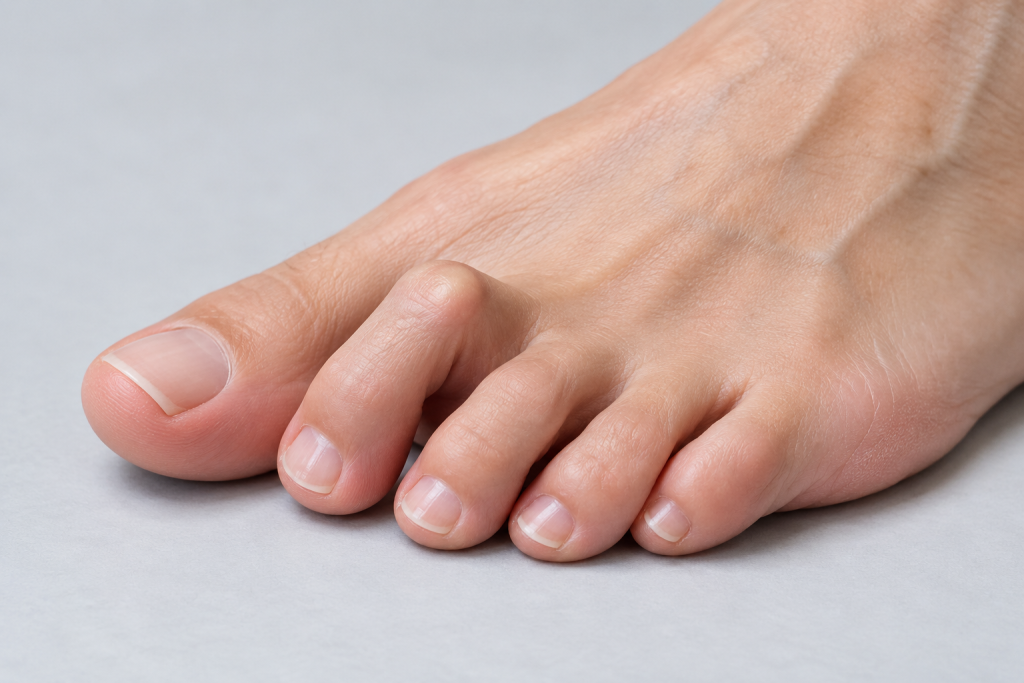
Hammertoes are deformities in which one or more of the smaller toes become bent at one or more of the toe joints instead of lying flat. It most commonly affects the second, third or fourth toes and can range from a flexible deformity that can still be straightened to a more rigid deformity that remains bent.
As the toe becomes more prominent, it may rub against footwear or place increased pressure on the tip of the toe or ball of the foot. This can lead to pain, irritation, corns or calluses and difficulty finding comfortable shoes. Hammertoes may gradually become more rigid over time, so treatment depends on the severity of the deformity, the symptoms it is causing and whether the toe remains flexible.
What Causes a Hammertoe?
Hammertoes develop when the muscles and tendons that control the toe become unbalanced, causing the toe to gradually bend at one or more joints. Foot structure and mechanics can contribute to this imbalance, and the deformity may become more noticeable over time.
Several factors can contribute to the development or progression of a hammertoe, including the shape and structure of the foot, muscle or tendon imbalance, arthritis, previous injury and certain neurological conditions. Bunions can also contribute by placing pressure on the lesser toes and changing their position.
Footwear does not necessarily cause every hammertoe, but shoes that are narrow, short or have a tight toe box can increase pressure on an already bent toe and make symptoms considerably worse.
Common Symptoms of Hammertoes
Hammertoes do not always cause pain, particularly when the deformity is still flexible. As the toe becomes more prominent or rigid, pressure from footwear and walking can lead to a number of symptoms.
- Pain or irritation on the top of the bent toe
- Corns or calluses where the toe rubs against footwear
- Pain or pressure at the tip of the toe
- Pain under the ball of the foot
- Redness, swelling or irritation around the affected joint
- Difficulty wearing certain shoes comfortably
- Increasing stiffness or inability to straighten the toe
Concerned about a Hammertoe?
Schedule an appointment with Alberta Family Podiatry to have your hammertoe assessed and discuss which treatment options may be appropriate for your condition. Call us at 587-355-3992 or use the text button on this page to contact our clinic.
Hammertoe Diagnosis and Assessment
Hammertoes can usually be diagnosed with a physical examination of the foot. During your assessment, we examine the position of the toes, determine whether the deformity is flexible or rigid, identify areas of pressure or pain and assess the overall structure and mechanics of your feet.
X-rays may be recommended when more information about the joints, bone alignment or severity of the deformity is needed, particularly when surgical treatment is being considered.
For additional patient information about hammertoes, visit the American College of Foot and Ankle Surgeons.
Non-Surgical Treatment for Hammertoes
Treatment depends on whether the hammertoe is flexible or rigid, how much discomfort it is causing and whether there are associated problems elsewhere in the foot. When symptoms are mild, treatment is usually focused on reducing pressure and improving comfort rather than surgically straightening the toe.
Non-surgical treatment may include footwear with a wider or deeper toe box, padding or offloading of painful pressure areas, treatment of associated corns or calluses, and changes in footwear or activity. In some patients, custom orthotics may also be recommended when foot mechanics or pressure beneath the forefoot are contributing to symptoms.
These treatments can often reduce discomfort and pressure, but they generally do not permanently straighten a structural hammertoe. When the deformity is painful, rigid or continues to interfere with footwear despite conservative treatment, surgery may be considered.
Hammertoe Surgery
When hammertoes become painful, rigid or continue to interfere with footwear despite conservative treatment, surgery may be considered. The goal of surgery is to improve the position of the toe, reduce painful pressure and create a more functional and comfortable foot.
The procedure used depends on the type and severity of the deformity. For a flexible hammertoe, treatment may involve releasing or repositioning a tendon. More rigid deformities may require correction of the affected joint and removal of a small portion of bone. In some cases, a temporary pin or other fixation may be used to maintain the corrected position while the toe heals.
Hammertoe surgery is individualized to the patient. During your assessment, we will discuss the specific procedure recommended for your toe, what the surgery involves and what you can expect during recovery.