Plantar Fasciitis
About Plantar Fasciitis
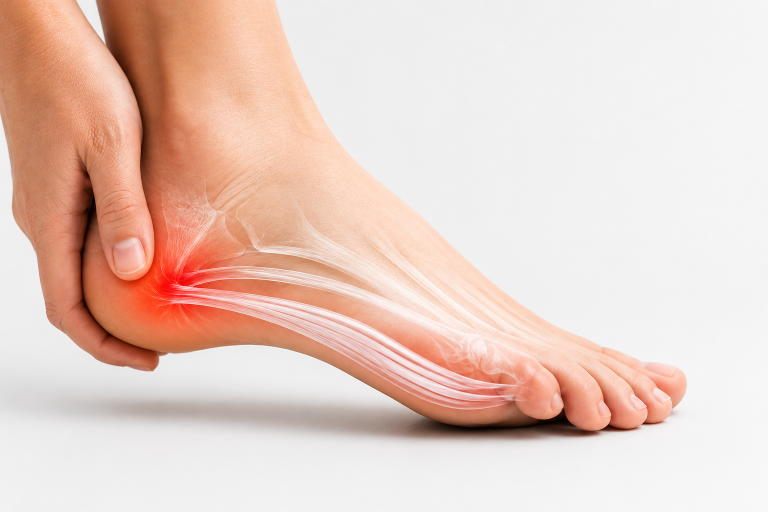
Plantar fasciitis is one of the most common causes of heel pain. It occurs when the plantar fascia, a strong band of tissue that runs from the heel toward the toes, becomes irritated, thickened, or inflamed. The plantar fascia helps support the arch of the foot and plays an important role in normal walking.
Pain is located in the heel and/or arch of the foot and typically develops gradually.
The pain can feel like:
- stabbing
- aching
- bruised sensation
Many feel intense pain for the first few steps after resting. This pain typically diminishes after walking and stretching the foot out for a few minutes.
Increasing pain with standing and walking for prolonged periods is also very common.
Causes of Plantar Fasciitis
This condition often develops when increased stress is placed on the plantar fascia over time. Several factors can contribute to this stress including:
- Feet that roll inward or flatten excessively while walking or running
- High-arched feet
- Tight calf muscles
- Limited movement of the great toe joint
- A sudden increase in walking, running, or other high-impact activities
- Weight gain
- Poorly supportive or inappropriate footwear
These factors do not necessarily cause plantar fasciitis on their own. The way your foot functions when standing and walking also plays an important role. If the arch moves excessively or the great toe does not move properly, additional tension can be placed on the plantar fascia where it attaches to the heel. Over time, this can lead to irritation and pain.
Heel Pain Affecting Your Daily Activities?
Schedule an appointment with Alberta Family Podiatry. Call us at 587-355-3992 or use the text button on this page to contact our clinic.
Treatment of Plantar Fasciitis
Treatment for plantar fasciitis depends on the severity of the condition and the factors contributing to increased stress on the plantar fascia. At Alberta Family Podiatry, we assess your foot structure, joint movement, muscle tightness, footwear and walking mechanics to help determine why the problem has developed. Treatment is then tailored to reduce pain, improve foot function and decrease stress on the plantar fascia.
Treatment commonly focuses on three areas:
Reducing Pain & Inflammation
- Ice
- Medication (NSAID’s)
- Cortisone injections
- MLS Laser Therapy
- Shockwave Therapy (ESWT)
Improving Flexibility
- Calf stretching
- Arch rolling/stretchin
- Massage
Improving Foot Support and Mechanics
- Supportive footwear
- Replace insoles
- Custom orthotics
- Taping or bracing
Not every treatment is appropriate for every patient. An examination can help determine which factors are contributing to your heel pain and which treatments are most likely to help.
Recovery time also varies. Some patients improve within several weeks, while others may require several months of consistent treatment. Following the recommended treatment plan and addressing the underlying mechanical factors can be important for long-term improvement.
Our goal at Alberta Family Podiatry is to identify the factors contributing to your plantar fasciitis and develop a practical treatment plan to help you return to comfortable daily activity.

Heel Pain or Plantar Fasciitis?