
Arthritis
What Is Foot and Ankle Arthritis?
Foot and ankle arthritis occurs when a joint becomes damaged or inflamed, resulting in pain, stiffness and reduced movement. Arthritis can affect many different joints in the foot and ankle, including the ankle, midfoot and joints of the toes.
Healthy joints contain smooth cartilage that allows the bones to move against one another with very little friction. When this cartilage becomes damaged or the joint is affected by inflammation, movement can become painful and the joint may gradually change in shape or function.
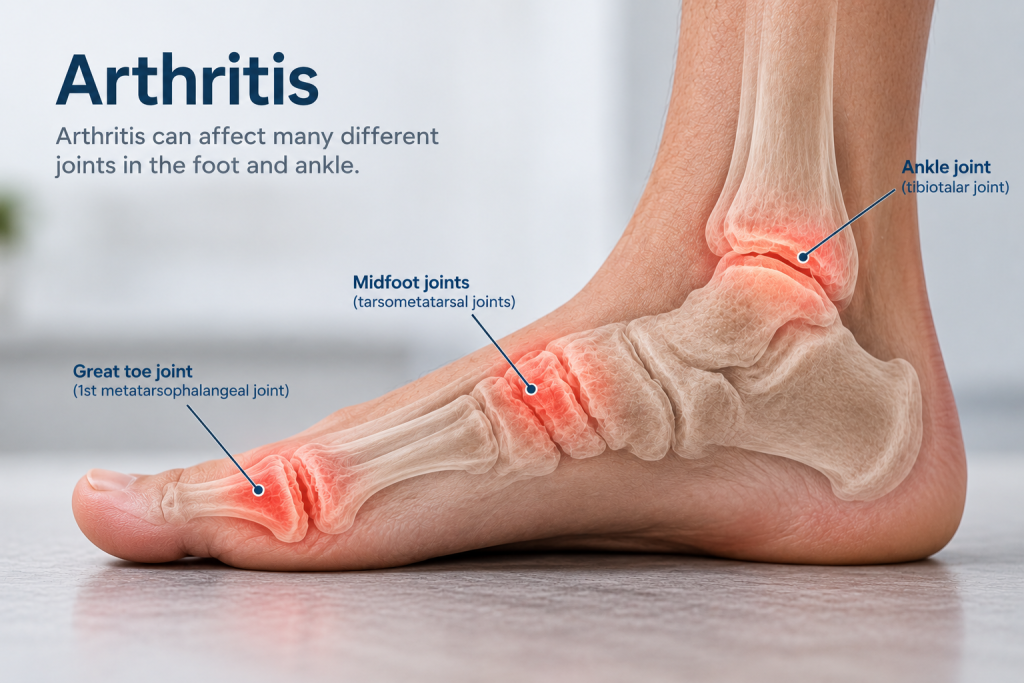
Several different joint conditions can affect the foot and ankle. Osteoarthritis is the most common, but arthritis may also develop following an injury or as a result of inflammatory conditions such as rheumatoid arthritis. The location and type of arthritis are important in determining which treatments may be most helpful.
Symptoms of Foot and Ankle Arthritis
Symptoms vary depending on which joint is affected and the type and severity of arthritis. Pain and stiffness often develop gradually and may become more noticeable with walking, standing or other activities that place stress on the affected joint.
- Pain in the affected joint
- Joint stiffness or reduced movement
- Swelling around the joint
- Tenderness with pressure
- Pain with walking or standing
- Difficulty with certain footwear
- Grinding or catching sensations
- Changes in the shape or position of the foot
Dealing With Foot or Ankle Arthritis Pain?
Schedule an appointment with Alberta Family Podiatry to have your foot or ankle assessed and discuss which treatment options may be appropriate for your condition. Call us at 587-355-3992 or use the text button on this page to contact our clinic.
Common Types of Foot and Ankle Arthritis
Osteoarthritis
Osteoarthritis develops as the cartilage within a joint becomes damaged over time. As the cartilage deteriorates, the joint may become painful and stiff, and bone spurs can develop around the joint. In the foot, osteoarthritis commonly affects the great toe and midfoot, while the ankle may also be affected.
Post-Traumatic Arthritis
Arthritis can develop after an injury such as a fracture, severe sprain or other damage to a joint. Symptoms may not appear until years after the original injury. Post-traumatic arthritis is particularly important in the ankle, where previous injuries can eventually lead to cartilage damage, pain and stiffness.
Rheumatoid and Other Inflammatory Arthritis
Rheumatoid arthritis and other inflammatory conditions can affect multiple joints in the feet and ankles. Inflammation can cause pain, swelling and stiffness and, over time, may contribute to changes in joint position and foot shape. Treatment of the underlying inflammatory condition is usually coordinated with the patient’s physician or specialist.
For additional information about osteoarthritis and joint health, visit Arthritis Society Canada.
How Is Foot and Ankle Arthritis Diagnosed?
Diagnosis begins with an examination of the foot and ankle to determine which joints are painful and how arthritis is affecting movement and function. We assess joint range of motion, areas of tenderness or swelling, foot structure and the way the foot functions when standing and walking.
X-rays are often helpful in evaluating the affected joints and may show joint-space narrowing, bone spurs, changes in joint alignment or other signs of joint damage. In some situations, additional imaging or laboratory testing may be recommended depending on the type of arthritis suspected.
Treatment Options
Treatment depends on which joint is affected, the type and severity of arthritis and how much the condition is interfering with daily activities. The goal is to reduce pain, improve function and decrease stress on the affected joint.
Conservative treatment may include changes in footwear, activity modification, anti-inflammatory measures, bracing or other forms of joint support. Custom orthotics may be recommended when changing the way pressure and forces move through the foot can help reduce stress on a painful arthritic joint.
Corticosteroid injections may be considered for some painful joints to help reduce inflammation and provide temporary relief. The usefulness of an injection depends on the joint involved and the type of arthritis.
When arthritis is advanced and symptoms continue despite conservative treatment, surgery may be considered. The procedure depends on the location and severity of the arthritis and may include removing painful bone prominences, joint-preserving procedures or fusion of a severely damaged joint.